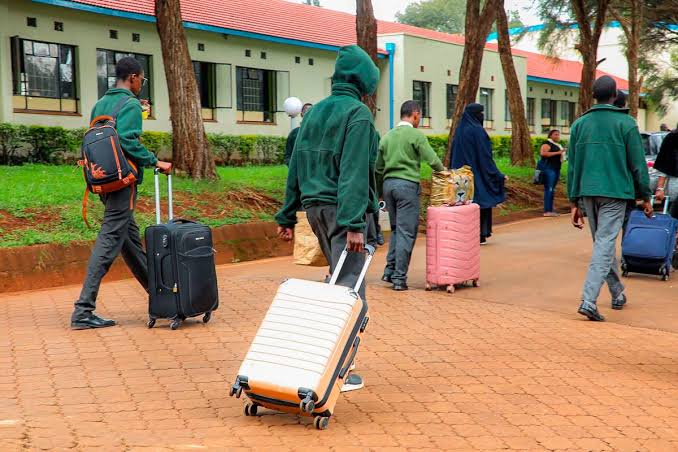
Recently, schools experienced a wave of unrests that destabilized the learning environment in Kenya for some period. Just like past experiences, school administrations are rushing to take harsh punitive actions against perpetrators. Unfortunately, the rigidity with which the society approaches youngsters’ conflicts cannot commensurate the highly transforming teenagers’ tensions and fears. For the society to overcome such incidences, there is need to demystify the myth surrounding the perpetration of egregious actions by the youngsters. Just like any other group whose voice has been largely ignored, learners are using belligerent behavior to register their multifarious concerns. Relevant stakeholders need to realize that such actions are not just spontaneous but an explosion of piled up pressure that comes out as a rancorous reaction to teenagers’ ignored needs. The few perpetrators represent a compendium of more dissatisfied teenagers with the same anger but lack the courage to face the brunt of a superior society that is unbothered to change tact in handling teenage conflict.
The major cause of escalating indiscipline among the youngsters is failure by the society to accept that the contemporary children are morphing into adulthood faster than expected. Previously, youngsters’ anxieties were taken for granted and treated as exaggerated. While juveniles in the past decades were technically unconcerned about most things, the current teenagers grow up overly conscious of their environment, therefore, ignoring them lowers their self-confidence. Most teenager, just like adults, take their fears seriously, letting them morph into depression. The high rate of suicides among contemporary Kenyan teenagers is a clear exhibition of their misconstrued needs.
While the contemporary learners mature fast and start to bear responsibility at an inchoate stage, the respective stakeholders are not doing enough to change their approach towards teenagers’ issues. Indisputably, these students have suffered the full scorch of COVID-19 more than any other group in Kenya, and this, compounded with their school conflicts, family issues, and the societal quagmires coalesces into psychological pressure that goes unattended. While guiding and counselling in schools was initiated to help learners, it has not been upgraded since then to match their increasing psychosocial needs. The current crop of teenage have transformed and can no longer be perceived in the same lens that the society used to perceive youngsters in the yesteryears.
Some of the age-old disciplinarian methods used against the current learners only calm the storm momentarily but do not palliate the underlying problem. To understand the socioemotional needs of learners, there is need for the government to set up stand-alone psychosocial centers in schools with professional counselors who understand that fast-changing dynamics have morphed children into adults at an embryonic stage. If the society continues to treat teenagers’ psychosocial needs with brutality and threats, it will only escalate the underlying conflict as children invent new ways of portraying their dissatisfaction. It’s high time since the society started perceiving learners as adults and help them overcome their underlying conflicts holistically.
The Columnist is a Research Consultant, Policy Analyst & Strategist